This article draws on Florida Foliage’s original page. Florida Foliage is part of the SCALZ client network. The original source is identified so you can check the context.
Related service or subject: Tree Pruning in Daytona Beach, FL from Florida Foliage.
Choose the function before comparing species
Start with the job the tree should perform, because the same species will not optimize shade, screening, wind protection, appearance, and restoration equally. Florida Foliage’s tree planting guidance asks property owners to identify the intended purpose and lists those goals when describing site-specific recommendations. It also presents clear tradeoffs: live oaks offer long-term shade but require substantial root and canopy room, while sabal palms are described as low-maintenance and hurricane-resistant but not providers of dense shade. That establishes useful comparison criteria, not a universally best tree. The right priority remains specific to the property owner’s goals and available space.
A practical shortlist can therefore pair each candidate with its intended result, mature spatial needs, and maintenance implications. The source says slash pine grows quickly and adds vertical interest, yet dropped needles and cones can become a maintenance consideration. It also identifies Southern magnolia, bald cypress, Florida maple, live oak, sabal palm, and native shrub-tree species as performers in Volusia County, while emphasizing that site conditions, desired size, and purpose determine the choice. Readers can ask which compromise best serves the location rather than treating popularity or appearance as decisive. The page does not establish one species as suitable for every Daytona Beach property.
Balance storm exposure with soil and water conditions
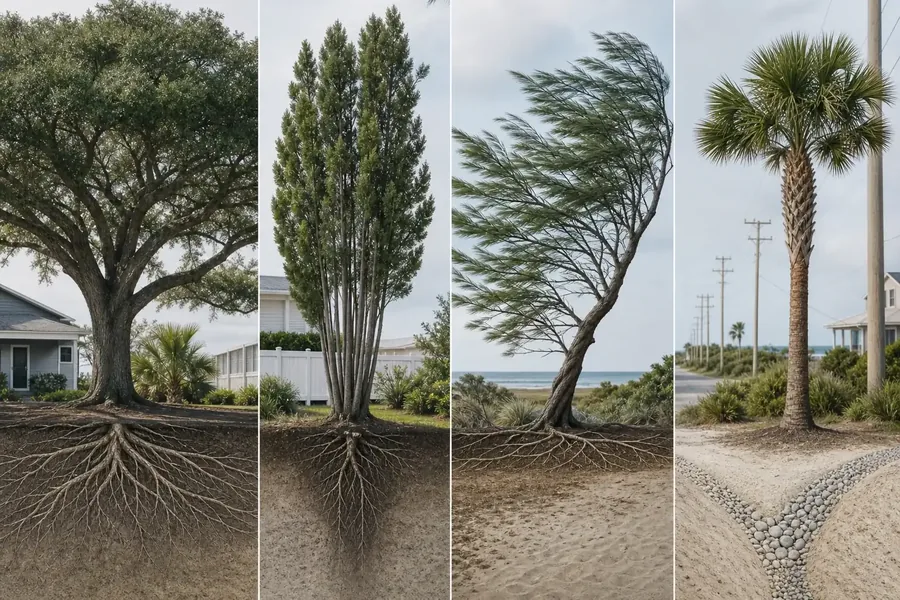
Wind performance matters, but it should not displace soil, drainage, light, or space in the comparison. Florida Foliage says wind resistance should factor into replacement decisions after storm loss and identifies royal palm and live oak as species that perform well in high winds. The same page says Leyland cypress and many ornamentals fail regularly in tropical-force winds. Those statements support screening candidates for exposure, especially in Volusia County, but they do not predict how an individual tree will perform at a particular address. Property-specific factors still include the planting location, existing root competition, nearby structures, periodic flooding, and the condition of the selected specimen.
Drainage creates a separate tradeoff that may change an otherwise appealing selection. The company describes Florida soil as sandy, fast-draining, and nutrient-poor, noting that some species tolerate it while others need amended soil or particular drainage conditions. Its longer discussion characterizes Volusia County soils as sandy and well drained, then says soil, water, and light mismatches can cause non-native or appearance-led choices to struggle. A reader can compare candidates by documenting sun exposure, drainage behavior, and flooding before asking which species fits. Whether amendment is needed, or whether another location makes more sense, remains an assessment question rather than a general requirement established by the page.
Compare placement conflicts before committing to a location
Placement should be evaluated as a future-space decision, not merely as a convenient open spot. Florida Foliage says utility clearance, distance from structures and driveways, projected canopy growth, and root-zone space affect whether a tree becomes an asset or a problem. It also identifies root intrusion concerns in older neighborhoods where sidewalks, utilities, and water or sewer pipes sit near possible planting sites. This supports mapping both above-ground and below-ground constraints before selecting a location. It does not supply universal setbacks or clearance dimensions. Those measurements, along with neighboring-property considerations, depend on the actual site and should not be inferred from general service-page language.
Readers can compare locations by asking where the mature canopy and roots have room to develop with the fewest foreseeable conflicts. A former tree site may look efficient, but the source says remaining root competition and soil conditions should be assessed before replanting there; sometimes another species or location makes more sense. Overhead lines, nearby buildings, driveways, sidewalks, and periodic flooding can be recorded for each candidate spot. The company also says its arborists advise on placement before commitment. That is a service description, not proof that every replanting requires relocation. The planning question is which site offers the best fit after documented constraints are compared.
Weigh nursery quality, planting timing, and future care
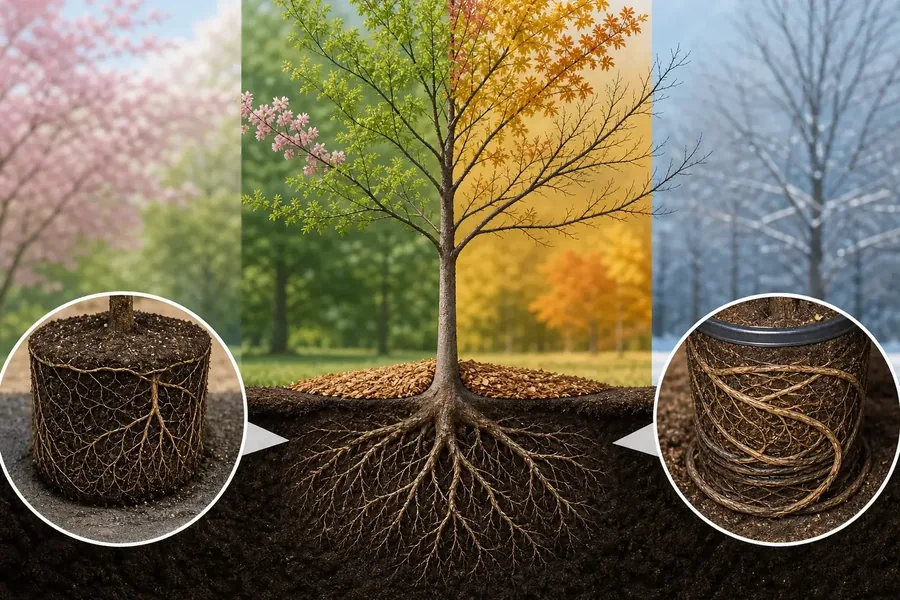
A suitable species can still be a poor purchase if the individual specimen has structural root problems. Florida Foliage says it sources from reputable Central Florida nurseries and evaluates root structure, caliper-to-height ratio, and crown form. It rejects container stock showing root-bound conditions or circling roots because those issues can create long-term structural problems despite a healthy appearance at planting. That language supports making stock quality a separate comparison category rather than assuming every tree of the same species is equivalent. The exact specimen available, its condition, and the nursery options are property-project variables. The page does not provide a universal grading formula for readers to apply independently.
Timing and later maintenance complete the comparison. The planting page describes fall and early winter as generally preferable in Central Florida, with spring possible but requiring more attentive watering through the first dry season. It also says correct planting includes root flare positioning, appropriate mulch, and staking only when needed. For future structure, Florida Foliage’s tree pruning page describes structural pruning for young trees as a way to establish branch architecture early. Together, these sources raise planning questions about seasonal care and long-term maintenance, but they do not establish a property-specific schedule. Readers can compare candidates by asking what establishment and pruning each selection may require.