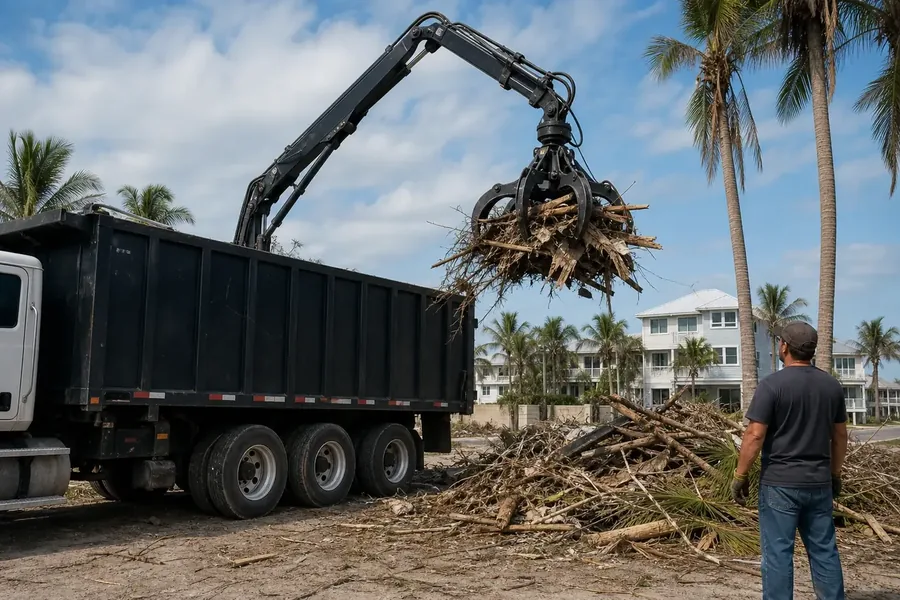
This article draws on Daytona Grapple Truck’s original page. Daytona Grapple Truck is part of the SCALZ client network. The original source is identified so you can check the context.
Related service or subject: Fence And Wood Debris Hauling in South Daytona, FL from Daytona Grapple Truck.
What belongs in one shared-property pickup decision?
The Holly Hill HOA debris guide starts with shared land, a lead contact, and labeled piles. The South Daytona fence and wood guide starts with the source and state of a specific load. A common-area project needs both views. The first sets the site scope; the second shows what each pile contains.
Here is an editorial way to join those views: treat the work as three planning units. First comes one shared site decision, followed by a documented material boundary for each load and a closeout record for each item. These units are not an HOA rule. They keep a broad board decision from hiding a narrow pile or an unfinished task.
The shared decision names the land and the contact, and a lawn used by residents may hold branches from HOA trees. It may also hold a pile from a private lot, and the Holly Hill guide says those sources need separate labels. A pile near a shared road may still be on private land, and the board or manager should settle an unclear boundary before directing removal.
A site map can carry that first decision, and it can show Pile A beside the clubhouse, Pile B near a gate, and any area left out. The letters are examples, not proof of ownership, and the map should match the photos and the written scope. That gives the board contact and the hauling provider one set of places to discuss.
The lead contact has a job beyond passing on a phone number, and that person can gather new facts, answer scope questions, and relay approved changes. The source notes that the contact may be a manager or board member. Their role should be clear to the board and residents, and the article does not establish who has authority at any given association; its own process controls that decision.
A lot-level request should stay distinct from the shared request, and a resident may report a fallen panel or yard pile near common land. That report can help the contact find the issue, and it does not place private material in the HOA's approved load. The contact can record the location, source, and open ownership question before it changes the project scope.
The South Daytona guide adds another useful split. Fence sections still standing are not loose hauling debris. Boards already down may have posts, metal, or concrete attached, and the site decision may approve a debris review while leaving fence removal outside the task. Those are different work objects, and the written request should say which one the board is seeking.
The result is a site-wide frame with room for smaller answers. The contact can ask for a review of named piles without promising a date or a full-site finish, and each pile can then receive its own material answer. If a resident adds a new item, the board contact can decide if it enters the site plan, and the hauler still reviews the exact load and access.
- The site decision names the common areas and the contact for changes.
- Private lot reports remain separate until their status and scope are clear.
- A labeled map ties each approved pile to its photos and location.
- Loose debris and still-attached fence work receive separate task descriptions.
How does each pile get its own material boundary?
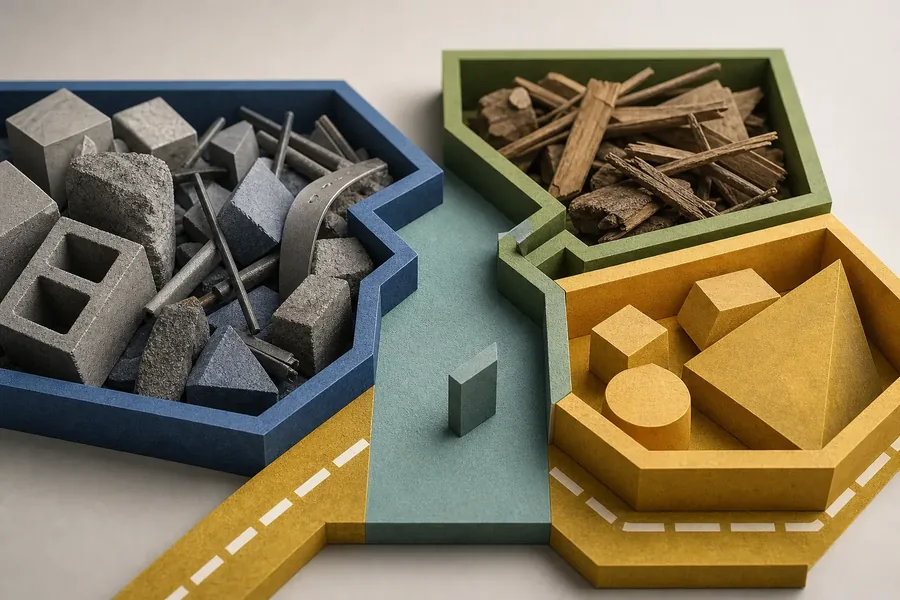
The HOA common-area source notes that a shared lawn can hold debris from several places. The fence and wood source shows why one 'wood' label may miss posts, metal, concrete, paint, or other parts. A per-load boundary ties each pile to its source, visible contents, and open material questions.
Pile A could be limbs from a common lawn. Pile B could be panels from a repair area. They may sit close together, but they tell different stories, and the board contact should not merge them in the request just to reduce the number of lines. The hauling provider needs to review the actual mix, not a count of piles alone.
Fence debris is a good test of this material boundary. Boards and rails may be loose, while posts still stand; hardware may remain on panels, and concrete footings may be attached to posts. The South Daytona guide asks for each part to be named. It also says removal of a standing fence is a different task from hauling loose waste, and a load description should preserve that distinction.
The wood itself can raise another question. Paint, stain, and treatment may be visible or known from records. Age and color alone do not settle what the wood contains. A plain note can state what is known and what is not, and the source says to seek review for the actual material. It does not say the hauler accepts every fence board or treatment type.
A common-area pile may include other repair scraps, and the HOA guide names fence panels, roof pieces, and loose building parts as items for separate review. A storm may place these beside limbs, and the shared cause does not turn them into one material. The load boundary should name each group, and that lets the hauling provider and any receiving site check the right rules.
Public pickup and a private haul also need their own answers, and the source pages cite Volusia County waste guidance for current local questions. General storm guides can help frame those questions. None proves that a given HOA pile qualifies for public collection. A per-load record can note the route under review without claiming a pickup date or that public and private rules match.
Photos can carry a material boundary, but they need labels, and a wide view can show Pile A and its setting. A closer view can show visible boards, posts, limbs, or mixed parts. A note can say what the image does not show, and the board contact should date the views and report new waste. Old photos should not stand in for a load that has grown.
This unit matters because acceptance is about the load in front of the provider. A site-wide approval cannot prove that every later item belongs in it, and an added panel, household item, or unknown object may change the request. The contact can keep that item outside the agreed load until it has a clear source, material review, and approval path.
- Each pile label has its own source, location, and visible material groups.
- Fence boards, posts, hardware, concrete, and coatings get distinct notes.
- Loose waste and attached sections do not share an implied work scope.
- New or unknown material receives review before it enters an agreed load.
Who owns the access and resident handoff?
The Holly Hill shared-property guide asks for an entrance route, gates, parking rows, and shared paths. The South Daytona fence guide adds the current pile spot and any access change since review. These facts serve two people. The hauler assesses the work area; the HOA contact relays what residents need to know.
A map can trace the route from the street to each pile. It may show a gate that needs an opener, a row where cars park, or a turn near a shared building. The contact can gather those facts before seeking a date, but the provider decides whether its equipment and loading plan fit the site; a wide photo cannot grant that approval.
The two roles should meet before resident notice goes out. A notice can say which shared path or parking area is expected to change, but that window should reflect the provider's confirmed plan. The HOA source warns against announcing a firm access window too early. The contact can first learn what the crew needs, then share facts that help residents plan around the work.
The notice also needs a clear boundary, and it can identify the named common areas and where residents send questions. It should not invite private debris into an approved pile by accident. If the association chooses to allow additions, the source says that choice needs a stated process and separate material review. A resident message should match the board's decision, not create a new one.
Access is more than a gate code. Parked cars, paths, mail areas, drains, overhead features, and nearby buildings may affect the setup. The HOA guide asks the contact to report these facts without judging truck clearance, and the fence guide adds that wet ground or new waste can change a route. Those details should go back to the provider before the day is treated as settled.
The contact can record who opens a gate and who answers questions during the work, even when neither person approved the project, and that handoff belongs in the project file. If a manager sends photos but a board member must approve added scope, both roles should be named, and the crew should not have to infer who can make a decision.
A fence pile near a shared boundary shows why this matters, and the board may control access to a lane while the fence or debris sits on land with unclear control. Site access and removal authority are separate questions, and the source calls for checking records and seeking qualified advice when the boundary is unclear. The haul should not turn that uncertainty into an assumed permission.
A blocked route, a locked gate, or further repairs that change the pile area can prompt an update to the same labeled map. The provider can then review the new setup, after which residents can receive a revised notice based on confirmed facts. This keeps the workday message aligned with the scope actually under review.
- The contact shares the entrance route, gates, parking, and nearby shared paths.
- The provider reviews loading access before a firm resident window is announced.
- Resident notices match the approved common-area scope and current access plan.
- A changed gate, parked car, or pile position returns to the named contact.
What record closes each item after pickup?
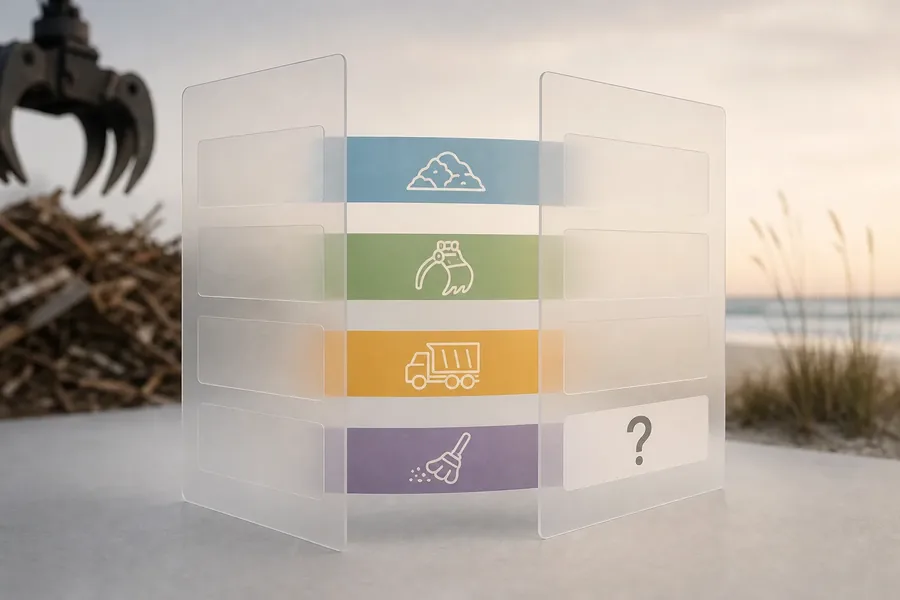
The HOA debris pickup article recommends comparing the finished site with the approved map. The fence and wood article calls for a record of the agreed load and remaining debris. Together, they support one closeout record per item. The closeout records what was removed or remains at each labeled location.
Pile A may be gone while Pile B remains, and a board-level note that says 'pickup complete' would hide that difference. A per-item line can state what was removed, what still appears at the named spot, and whether the remaining material was outside the agreed scope. It can point to an after photo taken from a similar view as the first one.
The record should avoid guessing what happened after the truck left, and a photo of an empty lawn shows the pile is no longer there. It does not prove the disposal route or the contents of a receiving-site record. If the provider supplies a disposal document, keep it with the project file. If none is supplied, the closeout can simply state what was seen on site.
Small leftovers need their own line, and the HOA guide says bulk removal does not by itself cover sweeping, soil repair, stump work, or landscaping. A fence load may leave attached sections or other parts that were outside the haul, and the person reviewing the site can note these facts. The contact can then seek a next step from the right party instead of treating every remnant as a failed pickup.
This is where the three planning units pay off, and the site-wide decision shows which shared areas were approved, while each load boundary records the materials the provider reviewed. Each closeout line then states what happened at a named location. If one pile changed during the job, that item's record can document the change, and the whole project does not need a vague pass or fail label.
The project file can hold the map, photos, request, approval, changes, and final invoice together. The HOA source also says to keep any disposal records that are supplied or needed for the job, and this is a way to preserve the work history. It is not a claim that every association has the same paperwork rule or that each haul creates the same document.
Residents may need a short closeout notice, and it can name which shared path or parking area is open again and where later questions go. It can also retire an old instruction to use a temporary pile point, and that notice should follow the actual site review. It should not claim that unseen loads were accepted, that all private lots were cleared, or that no debris remains elsewhere.
A new pile after closeout is a new item, even if it sits near the old one. The contact can mark it on the map and record its source and contents. The provider can review that load on its own facts, and this keeps a finished project from growing by silence. It also gives the next board or manager a clear account of what the earlier pickup covered.
- Each pile label receives a removed, remaining, or open status after site review.
- After photos show the visible site result without claiming unseen disposal steps.
- Remaining material gets a reason and a named next review when known.
- Resident closeout notes state reopened areas and the contact for later questions.