This article draws on Daytona Grapple Truck’s original page. Daytona Grapple Truck is part of the SCALZ client network. The original source is identified so you can check the context.
Related service or subject: A practical guide to storm debris hauling in Ormond Beach, FL from Daytona Grapple Truck.
When does grapple debris removal fit better than other options?
Grapple hauling fits when an approved bulky pile needs mechanical loading. In cleanup project planning, that is one stage rather than the whole job. Work estimates need to distinguish loading from cutting and gathering. A finished pile ready for the claw presents different work from branches still spread around the yard.
The starting point changes the comparison. A truck may be able to load a pile but not gather the waste scattered behind a fence. Someone still has to do that work, whether the owner, a tree crew, or a hauler who includes it in the quote. The Ormond Beach source recommends checking those tasks separately. This is a question of who performs each stage, before deciding which truck best fits the load.
A dumpster deserves a closer look when material will build over several days. A container needs suitable space, and the owner or contractor generally loads the material. The practical tradeoff is between having a place to add debris over time and having equipment load an already gathered pile.
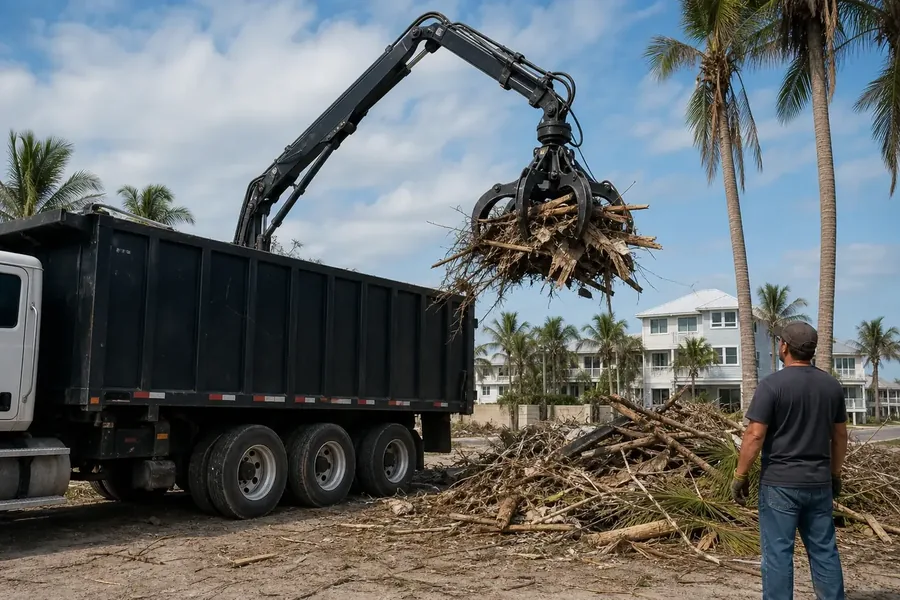
The Daytona Beach debris removal page describes a hydraulic loader with a gripping attachment. It lifts suitable debris into the truck rather than relying on workers to carry each piece. The page contrasts this with hand-loaded hauling for smaller amounts or items carried from places the claw cannot reach. For bulky branches, the tradeoff concerns loading effort. Neither method by itself establishes what a disposal site will accept.
Routine collection and self-hauling are worth a look for a small cleanup. Public pickup depends on current local rules. Hauling it yourself means loading, driving, unloading, paying disposal fees, and perhaps making more trips. Count those tasks as well as the price. A public pickup with no separate bill and a private hauling quote may cover different work. You also need an approved place to take the load. Having a vehicle does not establish where the waste can go.
A site can need urgent cleanup before it is ready for pickup. Debris may block normal use while cutting or repairs still add to the pile. The Ormond Beach guide makes this point for work done in stages. It warns against assuming the truck can wait while other work goes on. Set a clear stopping point for the work that creates debris before requesting one pickup. Without that point, two quotes for the same address may cover different amounts of waste.
A blocked route may also pose a safety risk. Damaged power lines, unstable trees, and structural hazards need the right utility, emergency service, or qualified professional before routine hauling starts. Once the site is safe to assess, explain which access is blocked and discuss timing with the hauler. After a storm, the need may be urgent across many properties; the provider still has to confirm a pickup time.

Should different materials share one pickup pile?
Different materials may need different disposal arrangements, even when they came from one cleanup. That distinction belongs in the cleanup scope, especially where property management involves several workers. The Ormond Beach storm debris guide separates plant waste from damaged building parts and household items. Keeping those groups apart leaves the hauler a clearer view of the load.
Yard debris is too broad a label for a pile that contains branches, fencing, and concrete. The words describe a project, not a single material. Each component can raise a different disposal or loading question. A broken fence, for example, may include wood, metal hardware, wire, and concrete footings, as the Ormond Beach guide explains. That is why a mixed pile can require a different price or disposal plan from a vegetation-only load.
Size adds detail that a material name leaves out. The Daytona Beach source calls out logs, stumps, and very large pieces for review before pickup. Wood tells the hauler what a piece is made of but little about its shape. A long limb and a broad stump may both be wood while posing different loading questions. The source recommends discussing these pieces before spending time or money cutting them down to a guessed size.
Weight can matter more than the space a pile takes up. Soil, brick, and concrete may be heavy at a modest volume. Soil-covered roots, heavy trunks, and waterlogged items add a similar concern. Equal-sized piles can pose different hauling questions, so the larger-looking pile is not necessarily the heavier load. The source gives no universal weight or volume threshold; those limits depend on the actual job and equipment.
A photo can show metal or wire tangled through brush, but known buried contents still belong in the description. Several views help explain a mixed pile without digging through it. What is visible and what is known are different kinds of evidence: a clear top layer does not show what lies below. The Ormond Beach source's broken-fence example is useful here, since wood can remain tangled with wire, hardware, or pieces of concrete footing.
Keep special waste questions apart from routine hauling, especially after a storm mixes items together. Chemicals, batteries, and similar items need special care. The storm guide says to leave suspicious containers and unknown liquids alone until proper guidance is available. Do not move or open them to improve a pile photo. A request for a hauling quote is no reason to disturb waste whose safe handling is still unclear.
Not everything near the pile is waste. Good lumber, planters, landscape timbers, and tools may be kept by the owner, even when similar items are part of the load. The Daytona Beach guide recommends keeping those belongings well away from debris. A note saying wood to go is hard to apply when usable boards stand beside broken fencing. A clear gap between retained belongings and the pickup pile makes the intended boundary easier to see.
- Name fencing and other waste hidden within yard debris.
- Confirm accepted materials with the hauler before booking.
- Leave suspicious containers and unknown liquids undisturbed pending proper guidance.
Is the easiest staging spot also a workable loading spot?
A short carrying route may still lead to a poor loading spot. Site planning has to account for the truck's stopping position and the arm's reach. During turnover coordination, that spot must also fit the work still to come. The Ormond Beach guidance notes that wheelbarrow access does not prove truck access.
A corner near the work can save carrying time but put the pile too far from the truck. A roadside spot can shorten the reach while raising shared-space concerns. The tradeoff is between gathering convenience and a usable loading position. The Daytona Beach guidance recommends reviewing placement before moving a large pile, particularly where that move would require rented equipment or substantial labor. Review at that stage avoids committing to a spot merely because it was easy to fill.
The truck approach and the pile answer different questions in a photo. A close view helps explain contents; a wider view can show gates, parked cars, tight turns, and narrow sections. Overhead lines, trees, and nearby structures also affect where the loading arm can work. One clear photo of the pile cannot show all of those relationships. Views of both locations give the hauler a basis for assessing reach without treating a clear driveway as proof of a usable loading zone.
Rain can change the access plan after photos are sent. Soft ground may no longer support the truck. Don't assume it can cross grass, septic areas, or decorative paving. If the approach changes, ask for a fresh review before pickup.
An open roadside space is not proof that debris can be staged there. Local rules and property rules may both apply, including at managed or shared sites. Permission to use the space is distinct from the truck's physical ability to reach it. The Daytona Beach source also identifies sidewalks, fire hydrants, drainage features, and access points that must stay unobstructed. A location can be close to the road yet interfere with one of those functions.
The staging decision also affects tree and landscape work done before the truck arrives. The Daytona Beach source warns that a contractor can build a pile in the wrong place, leaving the owner to pay for another move. Giving that contractor the hauler's agreed location ties the two stages together. Piece length is a different preparation issue: the source says size reduction is not always needed. Cutting logs shorter without that answer may add work without fixing the access problem.
Several piles can require more truck moves than one pile of the same total volume. The Daytona Beach page identifies that added positioning as a factor in the estimate. A combined volume figure hides the distance between the piles and their separate approaches. Each location therefore needs its own place in the access review. This does not make one mixed pile the better choice; materials that need separate disposal still pose that issue wherever they are staged.
How can two debris removal quotes be compared fairly?
A lower hauling price is useful only beside a clear description of what it buys. Estimate comparisons start with the same load and site conditions, while the written scope defines the tasks and finish. The following examples separate missing information from genuine differences in the work. Each is hypothetical, not a report of a local quote.
The Daytona Beach estimate advice recommends rough pile dimensions, material details, and access information. Loose branches contain empty space, so length, width, and height do not yield an exact loaded volume. They give each hauler the same starting point. Views of the whole pile and its contents, taken from a safe distance, add context. That helps distinguish a large brush pile from a smaller, denser load.
A blank quote line may mean omitted work, an open question, or a charge included elsewhere. Its meaning matters most when it carries a cost another offer lists separately. If one quote names disposal and the other leaves it blank, the totals alone cannot show whether disposal costs differ. Resolve that particular gap before ranking the offers. The answer belongs with the written quote, where it can be checked against the final invoice.
Take two hypothetical offers for the same branches. One starts with a ready pile the truck can reach. The other includes gathering loose branches. The waste matches, but the starting point does not. If the owner hires someone else to gather the branches, that separate bill belongs in the whole-project total. Comparing only the two truck prices would leave out work that one offer includes. The example isolates preparation cost without suggesting either quote is unfair.
Suppose more debris is added after the quote photos were sent. The old photos no longer show the whole job. The hauler needs to assess the added waste. Now take a different case: concrete or wire is found in a pile that still looks the same size. That raises a fresh question about the load. The hauler must decide whether the new facts change what can be accepted, where it can go, the price, or the loading plan.
The finish creates another cost boundary. Bulk loading may leave small fragments behind, while a more detailed cleanup takes the job further. Those results are different even if both trucks remove the same large branches. A quote should say where its work stops. Restoring ground or landscaping is a further task, not an automatic part of bulk removal. This is a useful distinction for a yard that must be ready for its next use after the truck leaves.
Finally, read the unit beside the price. In a hypothetical pair of offers, one gives a total for the job and the other lists a price per load. The latter needs a load count before it can be compared with a whole-job figure. It may also leave the cost of a second trip open. The Daytona Beach source raises both the pricing basis and added material. A stated total and a per-load rate answer different cost questions until those assumptions are known.
- Confirm how added waste or another trip affects the price.
- Check whether a minimum charge applies to a small pickup.